
History · Record Players
Gramophones and Record Players: Bringing Music to Life
Gramophones and record players changed how people experienced music, bringing recorded sound into homes around the world. From hand-cranked phonographs to modern turntables, these devices shaped music culture and preserved the warm sound of vinyl for generations.
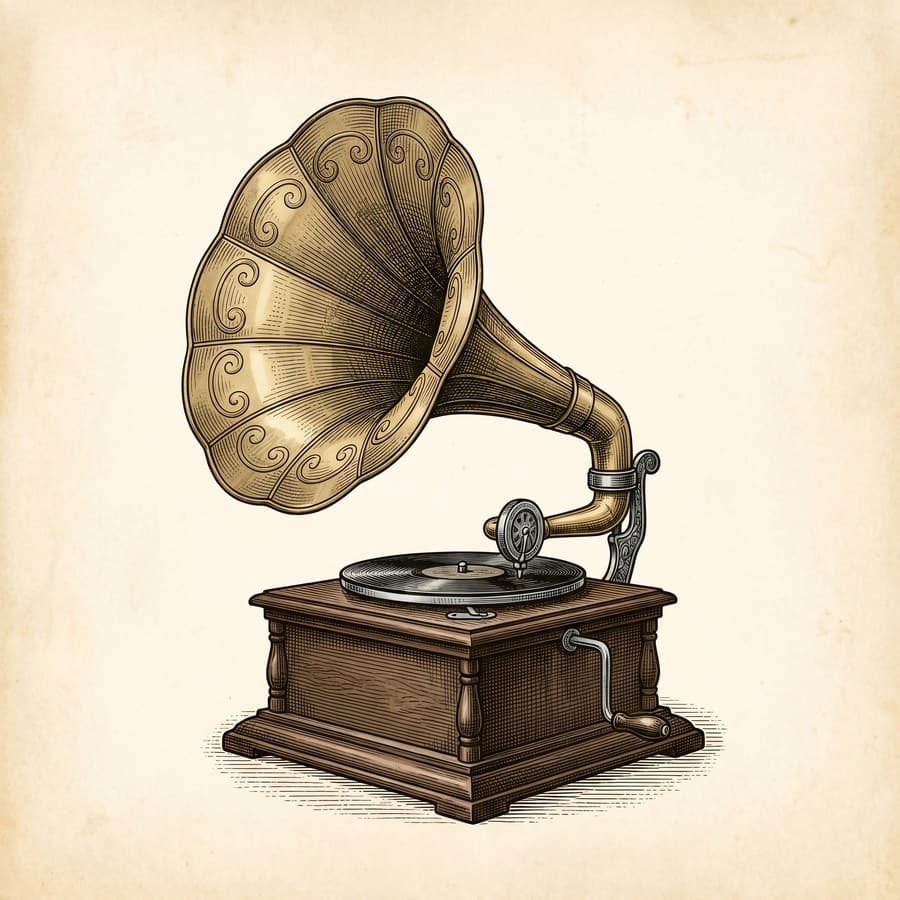
The origins: the birth of recorded sound
The journey of recorded sound began in 1877, when Thomas Edison invented the phonograph, a device that could record and reproduce sound using tinfoil cylinders.
Ten years later, in 1887, Emile Berliner refined the idea, introducing the gramophone with flat discs — laying the foundation for the modern record industry.
Innovation and evolution
Hand-cranked gramophones (1890s–1930s) — The earliest gramophones used spring-driven mechanisms and had to be cranked by hand. They played shellac records at 78 RPM through an acoustic horn.
Electric record players (1920s–1950s) — With electric motors, players no longer needed cranking, and vacuum tube amplifiers gave louder, clearer sound.
Vinyl records and hi-fi systems (1940s–1970s) — The 33⅓ RPM LP and the 45 RPM single transformed the industry, while hi-fi systems offered stereo sound.
Portable and automatic record players (1950s–1980s) — Compact, portable turntables made music more mobile, and automatic changers played records one after another.
Turntables and the vinyl revival (1990s onward) — As digital music took over, vinyl declined — but the 2000s sparked a resurgence among audiophiles and collectors.
Cultural impact and usage
- Music industry — vinyl shaped how albums were produced and consumed.
- Radio and DJs — turntables became essential tools for radio stations and disc jockeys.
- Nightlife and dance — the art of DJing and scratching grew out of turntable culture.
- Collectors’ items — vintage gramophones and records remain prized.
A few facts
- The first commercial LP was released by Columbia Records in 1948.
- Michael Jackson’s Thriller remains one of the best-selling vinyl records of all time.
- Analogue records capture continuous sound waves, which gives vinyl its signature warmth.
Why record players still matter
Even in the digital age, vinyl and turntables continue to thrive, offering a tactile listening experience that streaming cannot replicate.