
History · Radios
Radios: The Soundwaves That Changed the World
Radio has been a revolutionary force in communication, entertainment and culture. From the first wireless transmissions to the golden age of radio and beyond, it has connected people across continents.
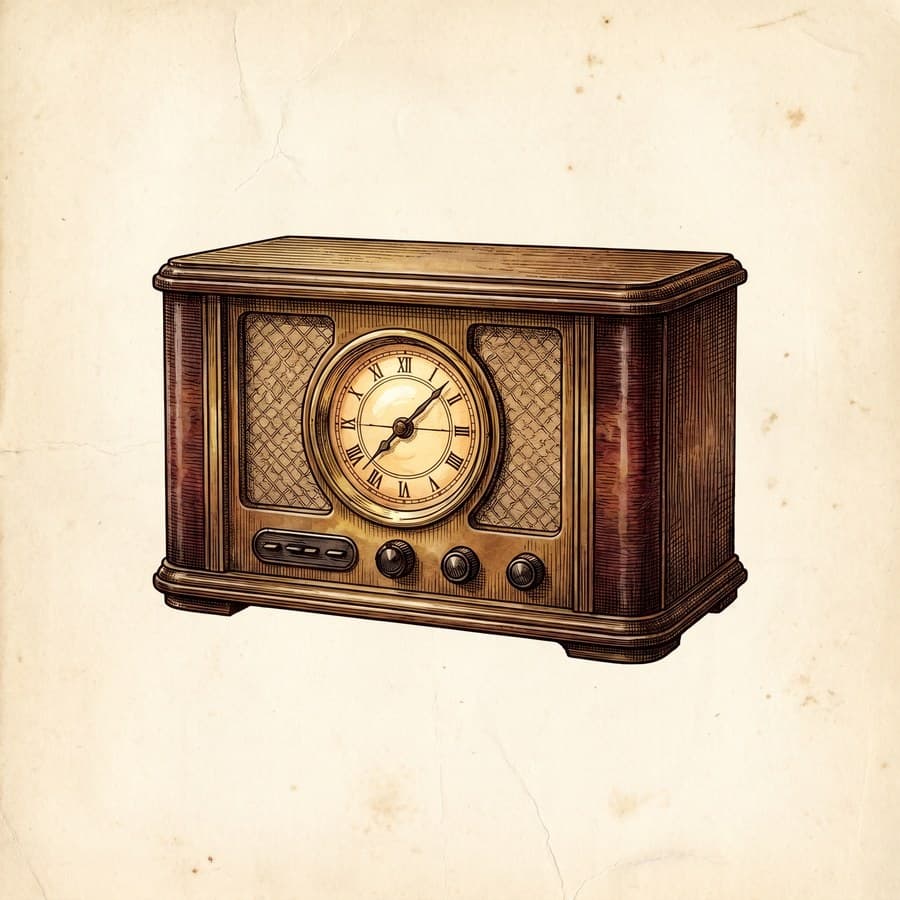
The origins: the birth of wireless communication
The story of radio begins in the late nineteenth century. James Clerk Maxwell first theorised electromagnetic waves in the 1860s, and Heinrich Hertz proved their existence in the 1880s.
In 1895, Guglielmo Marconi built the first successful wireless telegraphy system. In 1906, Reginald Fessenden made the first voice and music broadcast.
By the 1920s, radio stations were broadcasting regularly, launching an era of mass communication.
Innovation and evolution
Crystal radios (1900s–1920s) — The earliest radios used crystal detectors and needed headphones to listen. They required no electricity.
Vacuum tube radios (1920s–1940s) — The vacuum tube amplifier allowed louder, clearer sound through speakers, and made the radio a household staple.
The golden age of radio (1930s–1950s) — Radio became the dominant form of entertainment, with live dramas, music and news.
Transistor radios (1950s–1970s) — The transistor made radios small, portable and battery-powered.
FM stereo and hi-fi systems (1960s–1980s) — FM offered clearer, high-fidelity audio, making it the choice for music broadcasting.
Digital and internet radio (2000s onward) — Radio embraced satellite broadcasting and streaming, giving listeners global access.
Cultural impact and usage
- News and information — radio has been vital for delivering news, especially during wars and disasters.
- Music and pop culture — the rise of rock and roll, jazz and hip-hop was fuelled by the airwaves.
- A storytelling medium — before television, radio dramas captivated millions.
- Emergency communication — radio remains crucial for disaster relief and field communication.
A few facts
- The first commercial radio station, KDKA, began broadcasting in 1920 in Pittsburgh.
- During the Second World War, radio was the primary medium for wartime news.
- FM radio was nearly abandoned in its early days before becoming the preferred music format.
Why radios still matter
Despite the rise of digital media, radio remains a trusted, accessible and resilient form of communication.