
History · Projectors
Projectors: The Evolution of Visual Storytelling
Projectors have played a central role in entertainment, education and communication, changing how we experience films, presentations and images. From early silent film reels to modern digital projection, they have brought stories to life.
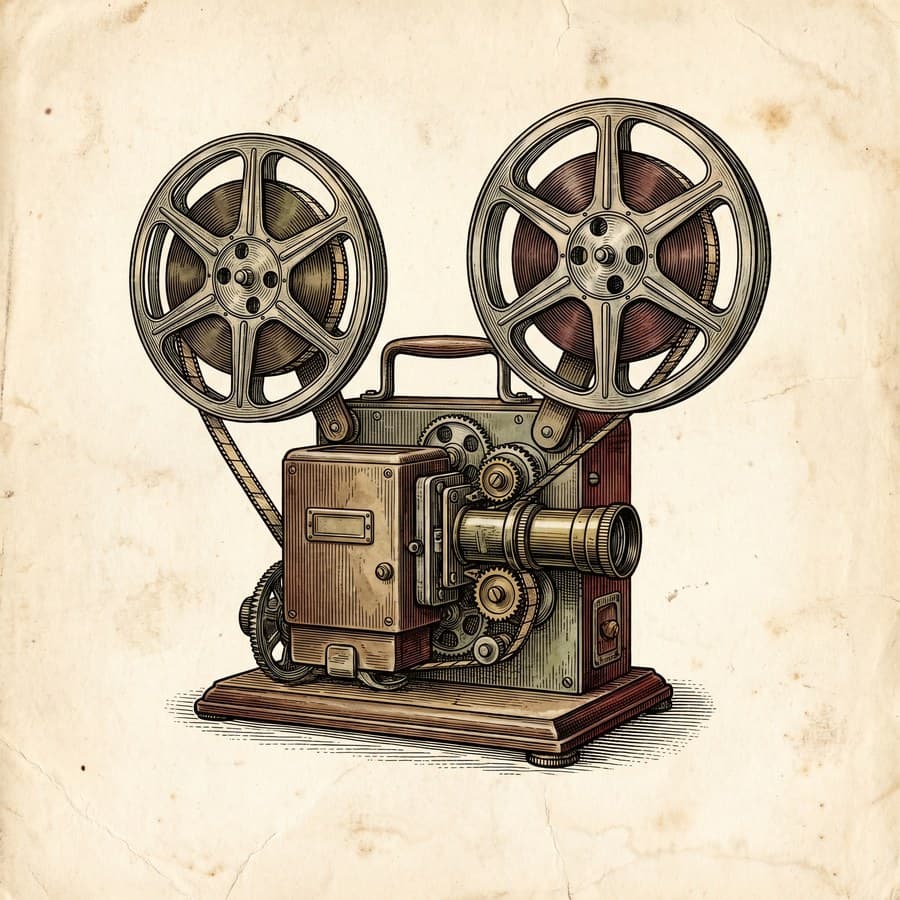
The origins: the birth of motion projection
Projection technology begins in the seventeenth century with the magic lantern, a simple device that used painted glass slides and a light source to project images.
The real revolution came in the late nineteenth century. In 1895, Auguste and Louis Lumière developed the Cinematograph, the first motion picture projector. From the 1930s, sound synchronisation transformed projection and made “talkies” possible.
Innovation and evolution
Magic lanterns and early projections (1600s–1800s) — Early magic lanterns used candles or oil lamps to project hand-drawn glass slides — the first form of projected storytelling.
Silent film projectors (1890s–1920s) — Film reels allowed moving images to be projected, launching the film industry and public movie screenings.
Sound film and home projectors (1930s–1960s) — Synchronised soundtracks changed cinema, and 16mm and 8mm projectors became popular for home movies.
35mm and 70mm theatrical projectors (1950s–1990s) — Cinemas adopted larger film formats for sharper visuals and widescreen effects — the look of the blockbuster era.
Overhead and slide projectors (1950s–2000s) — Projectors became standard in classrooms and offices, enlarging slides and notes for presentations.
Home video and digital projectors (1990s onward) — The shift from film to digital brought DLP and LCD projectors — smaller, sharper and more efficient.
Cultural impact and usage
- Cinema — movie projectors made theatre-going a global phenomenon.
- Education — slide and overhead projectors became classroom essentials.
- Business — presentations became more engaging through visual storytelling.
- Home entertainment — families recorded and played home movies on 8mm projectors.
A few facts
- The first film projected publicly was Workers Leaving the Lumière Factory, in 1895.
- IMAX projectors use 70mm film to produce some of the sharpest cinematic images.
- The magic lantern, the ancestor of the projector, dates back to the seventeenth century.
Why projectors still matter
Even with digital screens everywhere, projectors continue to offer a larger-than-life viewing experience. The nostalgia of film reels keeps them alive among collectors and filmmakers.