
History · Music Cassettes
Music Cassettes: The Portable Revolution in Music
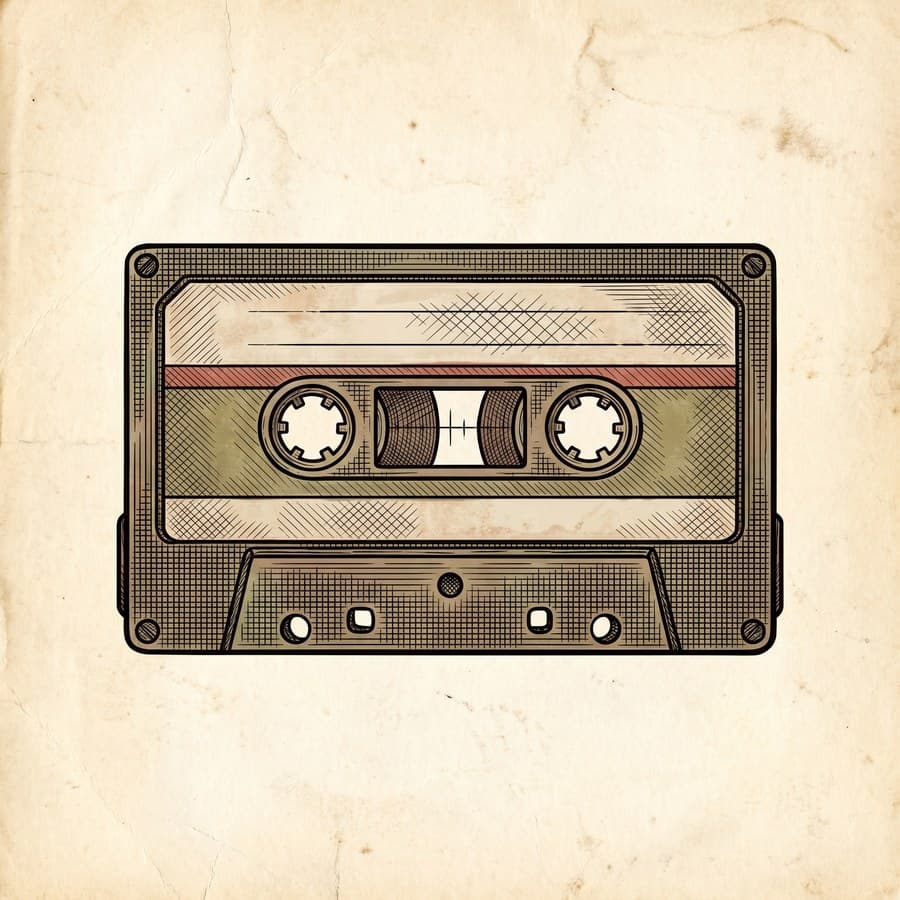
Music cassettes changed how people listened to and shared music, offering portability, affordability and personalisation. From making mixtapes to collecting albums, the cassette was the defining format for music lovers from the 1970s into the early 2000s.
The origins: the birth of the compact cassette
Before digital music, listening meant vinyl records and reel-to-reel tapes. The compact cassette, introduced by Philips in 1963, made audio recording and playback smaller, cheaper and more convenient.
Early tapes were designed for voice recording, but by the 1970s the technology had improved enough for quality music playback. Sony’s 1979 Walkman made the cassette the first truly portable music format.
Innovation and evolution
Reel-to-reel and early magnetic tapes (1940s–1960s) — Music was recorded on large reel-to-reel machines — high quality, but bulky and used mainly by professionals.
The rise of compact cassettes (1960s–1970s) — The compact cassette was a smaller, easier alternative to vinyl and reel-to-reel — and it made the mixtape possible.
The Walkman and the mixtape era (1979–1990s) — Sony’s Walkman made music personal and portable, giving rise to mixtape culture.
Boom boxes and car stereos (1980s–1990s) — Larger players with built-in speakers made the cassette the format of choice for street music culture and car audio.
High-quality tapes and auto-reverse (1980s–1990s) — Chrome and metal tapes improved sound quality, and auto-reverse decks removed the need to flip the tape by hand.
Decline and revival (2000s onward) — CDs and MP3 players cut into cassette sales, but a retro revival has brought cassettes back.
Cultural impact and usage
- Mixtape culture — making a mixtape was a way to share feelings and show appreciation for someone.
- Personal listening — the Walkman let people enjoy music privately for the first time.
- Radio recording — listeners curated their own collections by taping favourite songs off the radio.
- The DIY music scene — cassettes let independent artists and DJs distribute music affordably.
A few facts
- In 1983, cassette sales surpassed vinyl records for the first time.
- Some rare cassettes, such as early demo tapes from famous artists, are now worth a great deal.
- The cassette was the first format to make a personal, portable music collection genuinely practical.
Why music cassettes still matter
Despite digital dominance, cassettes are making a retro comeback, offering a tangible, personal music experience that streaming lacks.