
History · LP Records 33 RPM
LP Records: The Album Era on Vinyl
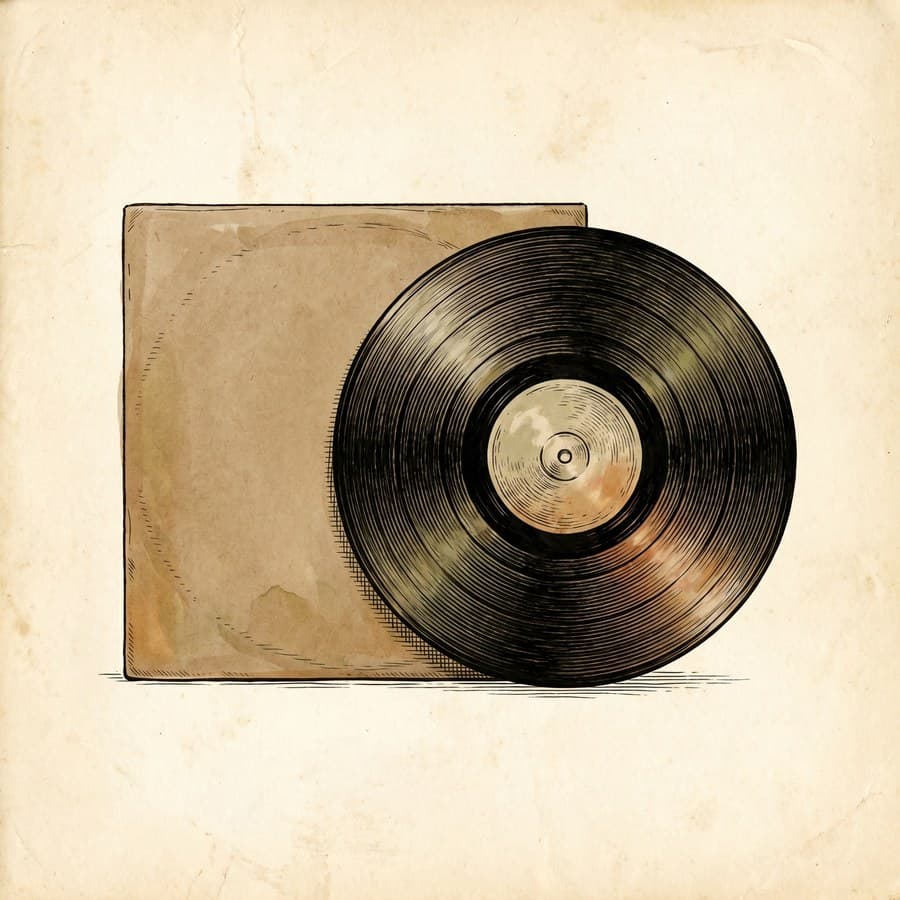
The Long Play record — the 12-inch LP played at 33⅓ RPM — gave music room to breathe. For the first time, an artist could put a full body of work on a single disc, and the album, as we know it, was born.
The origins: the birth of the LP
Recorded music first reached the home on shellac 78 RPM records, which dominated commercial releases from the 1900s into the 1940s. These discs were brittle and limited to three or four minutes a side.
In 1948, Columbia Records introduced the 12-inch LP, made of vinyl, which allowed up to about thirty minutes of playback per side. Full albums could now be played seamlessly on a turntable.
By the 1950s and 1960s, the LP had become the primary format for serious music.
Innovation and evolution
The rise of the LP (1948 onward) — The 33⅓ RPM LP brought higher-fidelity sound and a longer playtime per side, and with it the birth of the album era.
Stereo sound and high-fidelity pressings (1960s–1980s) — Advances in stereo recording and better pressing techniques made the LP the format of choice for audiophiles.
The cassette and CD challenge (1980s–1990s) — Smaller, more portable formats drew listeners away, and vinyl became a niche market.
The vinyl revival (2000s onward) — Since the early 2000s, the LP has seen a major comeback, with modern artists pressing collectors’ editions.
Cultural impact and usage
- The album era — the LP let artists craft cohesive musical journeys, such as The Beatles’ Sgt. Pepper’s Lonely Hearts Club Band.
- Album art — the 12-inch sleeve became a canvas in its own right.
- Collector’s appeal — limited-edition and coloured pressings are sought after worldwide.
- A listening ritual — dropping the needle and sitting with a full side made listening an intentional act.
A few facts
- The best-selling vinyl album of all time is Michael Jackson’s Thriller.
- The world’s largest record collection holds more than six million records.
- Some LPs are pressed in unusual colours and shapes, which makes them valuable.
Why lp records 33 rpm still matter
The LP offers a richer, more immersive way to hear music than streaming allows. The ritual of playing a record continues to captivate music lovers around the world.