
History · Clocks
Clocks: The Timeless Keepers of History
Clocks have played a crucial role in human civilisation, helping societies organise daily life, track the movement of the stars and measure progress. From ancient sundials to modern digital timepieces, the clock is a symbol of human ingenuity.
The origins: the birth of timekeeping
The effort to measure time goes back to ancient civilisations. The earliest devices — sundials, water clocks and hourglasses — were used by the Egyptians, Greeks and Chinese.
The first mechanical clock appeared in medieval Europe around the thirteenth century, using gears and weights. These early clocks were often installed in church towers.
In 1656, Christiaan Huygens invented the pendulum clock, which dramatically improved accuracy and laid the foundation for modern horology.
Innovation and evolution
Sundials and water clocks (ancient times – 13th century) — Ancient civilisations relied on shadows and the flow of water to estimate the time.
Mechanical tower clocks (13th–16th century) — The first mechanical clocks were massive, gear-driven structures in churches and town squares.
Pendulum clocks (17th–19th century) — Pendulum regulation revolutionised accuracy and led to grand, decorative clocks.
Pocket watches (16th–19th century) — Miniaturisation made timekeeping portable for the first time — and a status symbol for professionals.
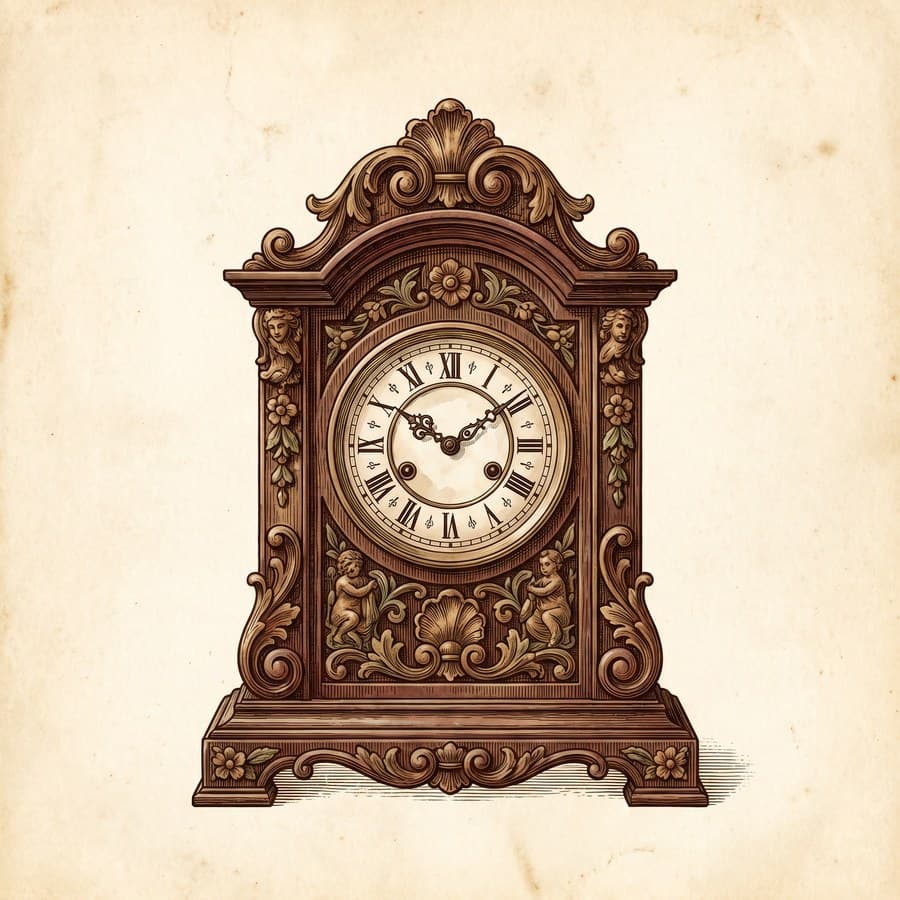
Grandfather and mantel clocks (18th–20th century) — Elegant and ornate, with long pendulum cases and intricate chimes, these clocks became centrepieces in the home.
Quartz and digital clocks (20th century onward) — The quartz revolution of the 1960s introduced highly accurate, battery-powered clocks, followed by digital displays.
Cultural impact and usage
- A symbol of precision — timepieces have guided navigation, astronomy and industrial production.
- Daily life — the alarm clock reshaped personal routines and made structured time essential.
- Art and design — ornate clocks showcase craftsmanship, from cuckoo clocks to fine Swiss watches.
- A cultural icon — clocks feature throughout film, literature and history, from Big Ben onward.
A few facts
- The world’s oldest working clock, the Salisbury Cathedral clock, was built in 1386 and still runs today.
- Big Ben is not the clock itself, but the nickname for the Great Bell inside London’s clock tower.
- One of the first wristwatches was created in 1868 by Patek Philippe for a Hungarian countess.
Why clocks still matter
Even as smartphones replace traditional clocks, mechanical timepieces remain loved for their craftsmanship, heritage and timeless appeal.